Navigating Change: From Surviving to Thriving
Change is no longer an event we schedule, manage, and tick off as done. It’s now the water we swim in. Whether you are proactively chasing a new opportunity or rapidly pivoting in response to market shifts, how your people experience that transition determines your success.
At Atwork, we help Australian organisations navigate this landscape - not by forcing change from the top down, but by building the collective capability to adapt, grow, and thrive.
The Two Speeds of Change
Historically, we talked about change as being either 'proactive' (we chose to do it) or 'reactive' (it was forced upon us). Today, the line is much blurrier.
The reality is that both require a different mindset:
- Proactive Change: Setting the agenda, innovating, and taking your team on a journey toward a shared vision.
- Responsive Change: Sensing shifts in your industry and having the agility to pivot quickly without burning out your team.
Redefining the 'Human Side' of Change
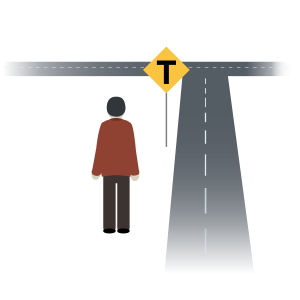
Every change initiative involves moving from where you are today (the current state) to where you need to be (the future state).
But in a modern workplace, change management isn’t a sidecar to a project – more and more, it is the project. Because organisations don’t change; people do.
Depending on what you’re tackling, change usually falls into three categories:
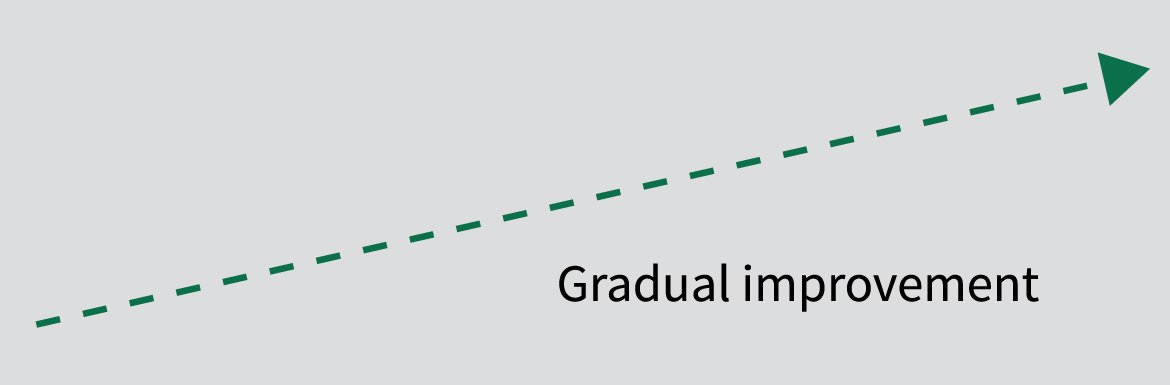
Continuous Improvement (Incremental)
This is the day-to-day work of making things better. It’s gradual, low-risk, and driven by your team. It doesn’t need a heavy change program - just a culture that supports continuous learning.
Transitional Change (The 'A to B' Journey)
This is where we have a clear starting point and a defined destination - like implementing a new system, moving offices, or restructuring a department.

[ Current State ] ---> [ The Transition (Where the magic & mess happens) ] ---> [ The Evolving Future ]
On paper, what may have looked like a straight line becomes a human journey. The roadblocks are rarely technical; they are cultural. We help you navigate:
- Defining the 'Why': Ensuring everyone understands the destination and why the status quo is no longer an option.
- Managing Change Fatigue: Staging the journey so your team isn't overwhelmed by too many initiatives at once.
- Reframing 'Resistance': In modern change, we don’t 'manage' resistance - we listen to it. Pushing back is often just a sign that people care, or that they’ve spotted a risk the leadership team missed.
- Keeping Momentum: Supporting your leaders to keep energy high when the initial excitement fades.
Transformational Change (The Unknown)
What if you know you need to change, but the destination isn’t fully clear? Or worse, what if early warning signs were missed, and you’re now facing a critical pivot to remain relevant?
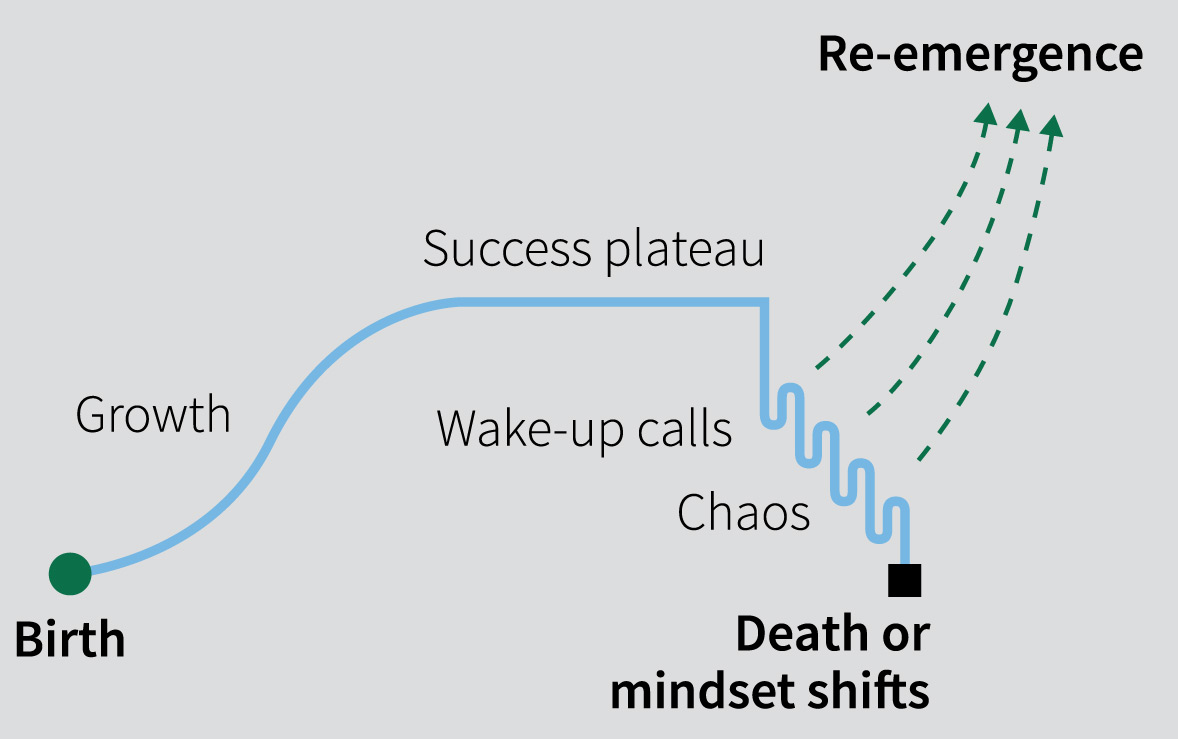
When the future is ambiguous, traditional change plans fall short. This is where change readiness and organisational resilience come in.
Rather than trying to predict every step, we help you build the 'change muscle' in your people. We focus on psychological safety, open communication, and agile decision-making so your team can navigate the chaos, adapt in real-time, and design the future together.
Ready to lead your next transition?
Whether you're planning a major system rollout or looking to build a more adaptable culture, we’d love to help. Let’s make a time and discuss where you’re at, and where you’d like to be.
Why the old Change playbook no longer works
We’ve all heard the statistic: only one in three change initiatives succeeds. It’s a number first popularised by John Kotter in the 1990s and backed up by McKinsey for decades.
But here’s the honest truth: after thirty years of structured change management methodologies, frameworks, and external support, why is navigating change still so incredibly tough?
Because the nature of change itself has changed.
Historically, change was treated as a transaction - something with a neat start, middle, and finish. Today, we live in a world of constant, overlapping evolution. To thrive, we need to move away from simply "managing" change, and focus on building collective adaptability.
It’s Always a Human Story
When change initiatives stall, it’s rarely because of a flaw in the technology or the process design. It’s because we forget that organisations are made of people.
Modern change management isn’t about pushing people through a rigid pipeline. It is about empathy, psychological safety, and co-design. When we ignore the emotional and psychological realities of disruption, we invite change fatigue. But when we involve our people in designing the solution, we build ownership and resilience.
What’s Driving Change Today?
In the Australian market, business leaders are navigating a complex landscape of shifting forces. Today’s change is rarely driven by just one factor; it’s usually a mix of:
- Technological Shift: Integrating AI, automation, and digital platforms into daily workflows.
- Structural Evolution: Managing mergers, acquisitions, or adapting to hybrid and remote working models.
- Market & Policy Shifts: Responding to economic pressures, environmental sustainability (ESG) expectations, or evolving government regulations.
- Shifting Expectations: Meeting the changing demands of both your customers and your employees.
Whether these shifts are incremental or revolutionary, they all require one thing: a shift in culture and mindset.
Organisational Change is Personal Change
To transform a business, you have to support the individuals within it. As writer Robert Quinn famously noted, deep change requires us to challenge our fundamental assumptions and paradigms.
When the ground shifts beneath our feet, our natural human response is to seek stability. This is why "resistance" occurs. But in a modern workplace, we don't view resistance as a roadblock. We view it as valuable feedback - a sign that people care about their work and need more clarity, support, or agency to move forward.
Where is Your Team on the Adaptability Spectrum?
We all respond to change differently, and individually we may respond differently to different changes, or to the same type of change depending on the context. It’s no longer as simple as a personal ‘resister’ or ‘embracer’ model….
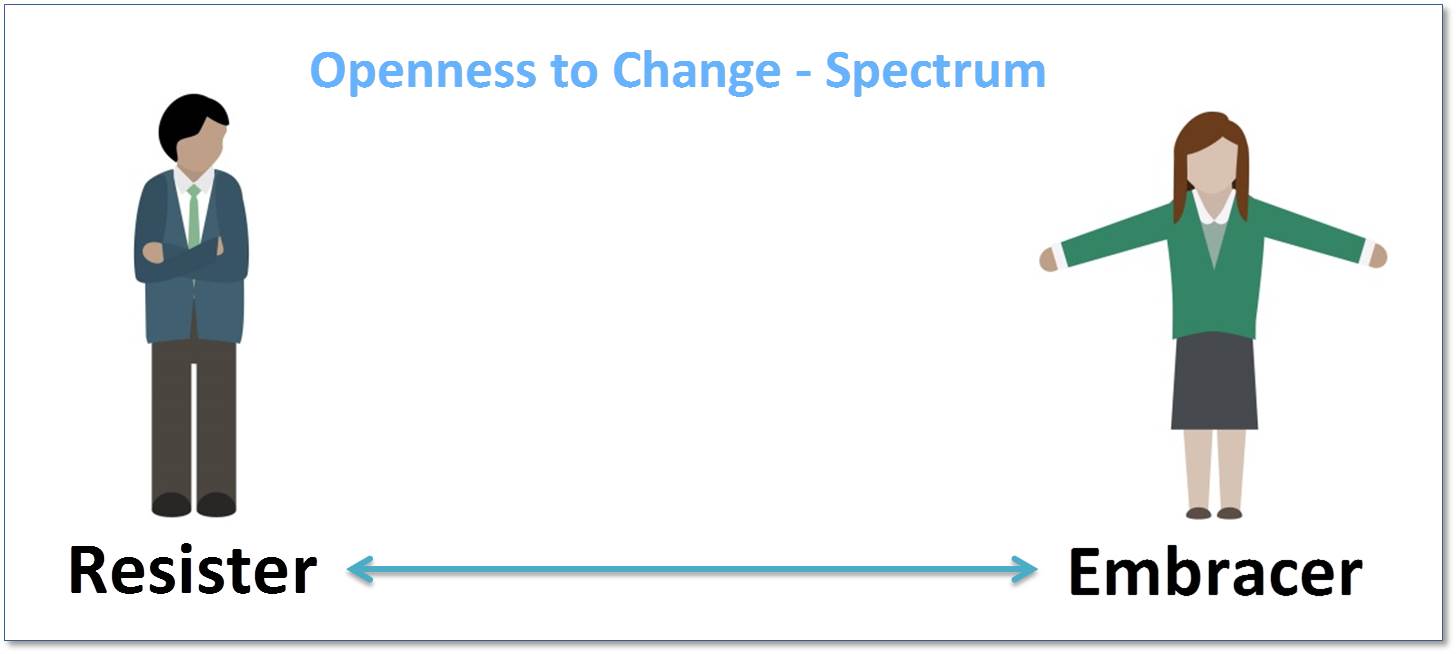
Rather than labelling people as "for" or "against" a new initiative, it’s more helpful to think of adaptability as a dynamic spectrum:
[ Change Fatigue ] <---> [ Cautious / Analytical ] <---> [ Early Adopter ] <---> [ Champion of Change ]
Your team members will sit at different points on this spectrum depending on the day, the project, and what’s happening in their lives. Someone who embraces a new software roll-out might struggle with a restructure of their reporting line. That’s not a problem - it’s just human nature.
Let’s Make Change Work for Your People
At Atwork Consulting, we don’t believe in cookie-cutter change frameworks. We work alongside your team to build real, lasting capability, ensuring your people feel valued, heard, and equipped to take the next step.
Take a moment to reflect:
- Where does your team currently sit on the adaptability spectrum?
- Are you experiencing change fatigue, or are you ready for the next leap?
Let’s have a chat about how we can help your business navigate your next chapter with confidence.
Navigating Change in a World That Doesn’t Stand Still
At Atwork Consulting, we’ve moved past the old-school idea that change is a project with a neat start and finish.
Traditional change models - like Kurt Lewin’s famous 1940s concept of ‘Unfreeze, Change, Refreeze’ - worked well when the business landscape was relatively stable.

But today? If you try to ‘refreeze’ your organisation, you’re already getting left behind!
Modern business demands continuous evolution. Rather than trying to lock things back into place, our focus is on building agile, resilient organisations that are comfortable operating in flow.
That said, we know that existing structures, legacy systems, and ingrained cultures can feel pretty ‘frozen’ when you’re trying to make a shift. Whether you’re navigating a merger, a restructure, or a digital transformation, our approach is designed to help you unstick the status quo and build momentum.
Putting People at the Centre of the Curve
When organisations change, people transition. Understanding this distinction is the key to successful adoption.
We use the Change Curve not as a tool to ‘manage’ people through a process, but as a map for empathy.
[Visual Suggestion: A clean, modern graphic of the Change Curve showing the transition from Shock/Denial -> Exploration -> Commitment]
Any change can trigger a sense of loss or uncertainty. Some team members might worry about their roles, while others might rightly identify practical hurdles to the new way of working.
If ignored, these concerns can stall your progress. But when met with transparency and psychological safety, this friction becomes a valuable feedback loop. We work with you to design interventions that support your people through the dip, accelerating the journey from uncertainty to active commitment.
The Four Pillars of Lasting Change
Drawing on proven behavioural psychology, we know that for people to truly adopt new ways of working, four key conditions must be met. We help you design a change program that ticks all four boxes:
- A Shared ‘Why’ (The Story): People need to understand the purpose behind the change and see where they fit in the future picture.
- Active Role Modelling (The Walk): Leaders and influential peers must visibly live the new behaviours. Change is caught, not just taught.
- Aligned Systems (The Environment): Your structures, processes, KPIs, and technology must make the new way of working the easiest path to take.
- Capability Building (The Skills): You can’t expect people to do things differently if they don’t have the practical skills, tools, and confidence to do so.
Head & Heart: Finding the Right Balance
Traditionally, businesses have relied on a deficit-based approach to change: What’s broken, and how do we fix it?
While focusing solely on the ‘burning platform’ creates urgency, it can also breed anxiety, blame, and change fatigue. Conversely, a purely positive, ‘dream-big’ approach can feel disconnected from the reality your team is facing on the ground.
We believe the magic happens in the middle. We combine realistic problem-solving with strength-based aspiration.
Fixing what’s broken (The Head) + Designing what’s possible (The Heart)
= Sustainable Momentum
By balancing "what we need to fix" with "what we want to build together," we help you design change that is both practical and inspiring.
Let’s get things moving.
Every organisation is different, and there’s no one-size-fits-all playbook. If you have a major shift on the horizon, let’s grab a coffee or jump on a call to chat about how we can help your team thrive through the transition.
Real Change is co-designed, not delivered.
The ‘Inertia’ Trap: Let’s be honest - we all suffer at times from a bit of status quo bias. In business, it’s easy to look at a transformation strategy and think, “Great idea - for everyone else.” As leaders, we often overestimate our own readiness for change while underestimating how deeply comfortable the current way of working is for our teams. Resistance isn’t a sign of difficult employees; it’s a natural human response to a loss of control. When we assume our current processes are 'fine as they are,' it’s not stubbornness - it’s just our default setting seeking safety.
People Don’t Resist Change; They Resist Being Changed
The old-school approach to change was to design a strategy in a boardroom and 'roll it out' to the business. Today, we know that buy-in can’t be mandated.
Think of it this way: when we have a hand in choosing or designing something, we value it infinitely more. In a business context, this means shifting from dictating change to fostering true agency. While leadership’s job is to set the strategic North Star, the most successful transformations happen when employees are given the pen to write their own chapters of the story. When your people help build the engine, they’re fully invested in the journey.
Reading the Room: Navigating the 'Quiet Drag'
Modern transformation isn’t about pushing through obstacles; it’s about listening to them. Today, we don't view 'resistance' as a hurdle to clear, but as incredibly valuable feedback.
While active pushback is easy to spot and address, the real risk to your strategy is the subtle, systemic friction that quietly stalls progress.
- The Quiet Drag (Passive Disengagement): This is the silent killer of momentum. It looks like declining engagement, a drop in psychological safety, and 'presenteeism' - where people show up but check out. When change feels imposed rather than collaborative, motivation drops, small errors creep in, and your best talent starts looking elsewhere.
- The Delayed Reaction (Change Fatigue): Change fatigue is real, and it compounds silently. Your launch might seem like a success, but months down the track, teams quietly revert to old habits or suddenly push back. This isn’t a delayed rejection of the tech or the process - it’s the natural fallout of unaddressed anxiety and a lack of long-term support.
How We Work
We help you move from 'command and control' to empathy-led alignment.
Combining practical behavioural science with real-world cultural insights, we work alongside you to spot these friction points early. We don't do templated change management. Instead, we partner with your leaders to design human-centric engagement strategies that turn potential friction into shared ownership.
The result? A transformation that actually sticks, delivered by a team that feels heard, valued, and ready for what’s next.
Guiding people through change.
In a fast-moving business world, leaders can’t always promise absolute certainty - but we can provide clarity. The era of the all-knowing, 'command-and-control' leader is behind us. Today, great leadership is about being honest, adaptable, and giving your team a clear line of sight.
We help you design flexible change frameworks and transparent roadmaps that act as a steady anchor. Rather than forcing rigid plans, we focus on iterative progress that keeps everyone aligned and moving forward together.
This approach builds genuine psychological safety, cutting through the noise and reducing the mental load on your team. When people feel supported, heard, and clear on the direction, anxiety makes way for ownership - helping your organisation build the resilience to thrive through any transition.
People + Performance: The Real Formula for Change
When designing change, it’s easy to focus solely on the 'hard' metrics - the systems, structures, and spreadsheets. But the secret to making change stick? It’s your people.
If you’re only planning for systems and processes, you’re only planning for half a transformation.
Globally, the data is clear: transformation programs that focus equally on performance and 'organisational health' (our collective mindset, culture, and wellbeing) are over four times more likely to succeed.
What used to be dismissed as the ‘soft stuff’ is actually the hardest part of change - and the most critical. When leaders actively support their teams to shift mindsets and adopt new behaviours, the likelihood of a successful transition doubles.
At Atwork, we don’t just manage change; we enable it. We help you balance commercial outcomes with the human experience, ensuring your change strategies don't just look good on paper, they actually drive lasting performance.
Making change stick: Three core essentials.
While the business landscape is constantly shifting, the core of successful transformation remains deeply human. Modern change isn’t about pushing a process from the top down; it’s about enabling your people to lead the way.
Through our work with Australian organisations, we’ve found that the most successful transformations focus on three things:
- Co-design over top-down rollouts: People support what they help create. We involve your team early, designing the future with them, not for them.
- Building lasting capability: True change outlasts a project lifecycle. We focus on equipping your leaders and teams with the practical tools and adaptability they need to navigate not just this shift, but the next one.
- Amplifying what’s already working: It’s easy to focus on what’s broken. We take a strength-based approach - identifying your team’s existing 'bright spots' and scaling them. Positive momentum beats deficit-fixing every time.
How we work with you
Whether you’re just starting to map out a strategic shift, or you’re mid-way through a project and need some extra hands on deck to get it over the line, we’re here to help. We partner with you at any stage to deliver practical, people-first change that actually sticks.
Let’s have a chat about where your business is at, and where it could be.
Navigating Change, Together
Change is rarely linear, and there’s no single playbook for it. That’s why we don’t believe in forcing your business into a rigid, off-the-shelf methodology.
Instead, we partner with you to co-design a practical approach that respects your culture, supports your people, and fits your unique goals.
By blending modern, human-centred frameworks with real-world flexibility, we help your team navigate transition smoothly and deliver outcomes that actually stick.